Tuesday, October 3, 2017

Automatic Farms


Alexander Pedro
10/3/17
Automatic Farms


In a farm in the United Kingdom there is a farm completely run by robots. Researchers from Harper Adams university in Edgmond, UK harvested about 5 tons of barley from the first robotically tended farm. The entire process of seeding, fertilizing, collecting samples, and harvesting is completely automated by drones and self driving cars.

A similar project is being developed in Japan where they are building an indoor lettuce farm. This farm is completely autonomous an computerized. This farm in expected to open at the end of this year and it is predicting to lower the price or lettuce and make it healthier for the environment. The advantages of the types of automated and vertical farms is the ability to recycle.98% percent of the water used to feed the plants is recycled. Also the factory wont have to spray pesticides because they are indoors.

Image result for spread farm japan


Professional Practicality of the Drone

By Liam Godin


Since around the time of the release of DJI's "Phantom" in 2013, the commercial drone and its progress as a technology has been in the front line of the mainstream. Camera drones such as the Phantom series and several similar products have been adopted by photographers and videographers alike for their ability to capture pictures not possible to create before. 
Example picture from Phantom 4 camera


Professional uses for drones however, do not stop there. More recently, state researchers have been using camera drones to survey land in a much faster and more efficient manner than previously. Since 2012, Micheal Wing, director of the Aerial Information Systems Laboratory at Oregon State University has been experimenting in unmanned vehicles to explore land. He has said that most flights with the quadcopters have complications. He still believes that many research opportunities are made possible through the unmanned vehicles.
 
Micheal Wing (right) and doctoral candidate Cory Garms fly a
DJI Phantom 4

The DEC has also rolled out a drone program, hoping that they will aid in petroleum spills, wildlife surveys, search-and-rescue missions, forest fires, natural disasters, and several other tasks. DEC commissioner Basil Seggos said "The use of drone technology will help us do our jobs better and faster while saving taxpayer dollars" So far, there have been 14 pilots trained for several months in order to fly these drones efficiently. Several early missions have already been carried out with these drones.
Early DEC drone image of survey on damage caused
by Southern Pine Beetle on Long Island

Wearable solar thermoelectric generator

Alex Newton
Engineering
Wearable solar thermoelectric generator


Professor Kyoung Jin Choi at UNIST has introduced a new advanced energy harvest system, capable of generating electricity by being attached to clothes, and windows. The thermoelectrical generator is based driven by body heat. This device's goal is to improve efficiency by raising the temperature difference. One of the main drawbacks of the technology is body heat that such temperature difference is only 1--4 degrees Celsius. However the team solved this issue by introducing a local solar absorbed on a P1 substrate.

Professor Choi integrated flexible BiTe-based TE legs and sub micron thick solar absorbers on polymide substrate."Our new wearable STEG is expected to be useful in various applications, such as in self-powered wearable electronic devices," says Professor Choi. Professor believes that his technology will create plenty of talk and be a hot buy no pun intended.

KeySmart Pro

House and car keys are inconvenient and inefficient because there are too many of them to carry, they are heavy, easy to lose, and hard to distinguish. During the shark tank assignment this was my groups problem definition. I have found a solution to this problem, the KeySmart Pro. It works as a Swiss army knife of keys, which is exactly what the basic KeySmart is, but the Pro has some advanced features.

The KeySmart Pro not only holds 10 house keys and has an easy attachment loop for a key fob, but it also comes with Tile™ tracker built in. There is a free app on any app store for the Tile company that can be used to locate the keys geographically as well as make the keys play a sound so that they are even easier to locate. In addition to locating your keys it is advertised that the keys can also be used to find the phone, even making it ring on silent.

The KeySmart pro needed to combine four other devices with the pre-existing KeySmart. They needed to add the tile circuit board, a powerful LED light, a small rechargeable battery, and a charging port for the battery. Because the Tile company already produces small tracking chips for small purposes finding a circuit board to fit into the KeySmart was not as much of a challenge as other things. They had a hard time finding a battery because most batteries are circular so their solution was to use a very thin and small lithium battery. Lastly, they designed a charging system that will take the battery from 0% charged to 100% charged in two hours, which will last the typical user about 3 months. The keys can be recharged at the user’s convenience and there is an indicator light on the KeySmart that tells whether the battery is fully charged or not.
Video
The KeySmart Pro functions as a solution to my groups shark tank problem, because it is easy to find, or rather, difficult to lose, easy to carry, and they don’t make as much noise as other sets of keys will. The device perfectly fits the criteria that my group had put together for the Shark Tank project.

Egg-based Electronics

Electricity is formed through various methods. One of those is a breakthrough in the science world, using eggs for electronics. Surprisingly, eggs have properties of dielectric, which allows for them to be electrical insulators. Recent studies have found that the combination of hydrogen peroxide and egg whites (albumen) form memory devices.


The discovery of these memory devices, which are both transparent and flexible, benefit society greatly with artificial intelligence and overall brain memory. The images above show the albumen (a.) and the transparent memory device (c.). In order to get a better idea of what the memory device, or cell, is made of, take this diagram, which shows the different parts of the cell formed from the albumen and hydrogen peroxide. The cell is ultimately used for resistive memories, which provide memory through resistance instead of electric currents.
Changes from low and high current act as the change in turning the memory device from "on" and "off." This all works through a set of traps, which are the ions, and, when positively charged, turn the device off. However, when a the ion is negatively charged, the device turns on. In short, negative voltage turns memory device off, while positive voltage turns memory device on. This breakthrough for memory is still being studied, and while impressive, lacks complete understanding of the entire mechanism. New methods to improve the transparent, memory device will be discovered but this breakthrough paved the way for innovating the artificial intelligence/brain memory world. There have been devices similar to this, however, as stated before, the resistive quality of this particular cell allows for durable and overall better performance than non-resistive memory devices. 

source: Phys.org

The 'New Internet'

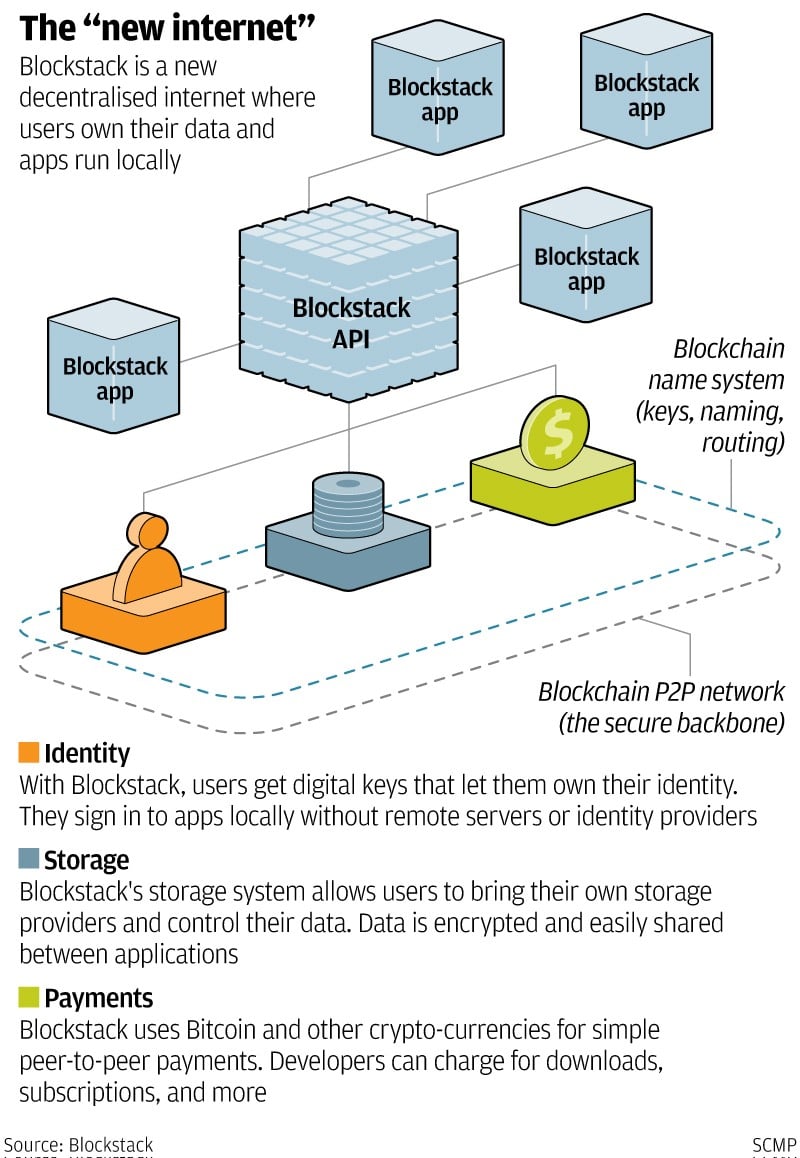
A Hong Kong-based software engineer is in the process of developing the 'new internet'. Blockstack, the name of the project, is a decentralized internet where users will keep their data locally when they run programs, rather than on remote servers. The main purpose behind Blockstack is to bypass China's "Great Firewall", however it will also serve to take the value away from large internet companies such as Google or Facebook and will put user's data back in their control.
A blockchain is a digital ledger shared between users. There is no central authority verifying and recording the transactions, instead it is done by a network of computers. The network verifies and copies information to each user and a record is made on the blockchain.“By using bitcoin transactions and putting some special data into each transaction, we’re able to create a virtual blockchain on top of the bitcoin blockchain that just has Blockstack-specific data,” Larry Salibra, the creator of Blockstack said. This will let user buy their own personal ID and users only include the information they want to include when logging into Blockstack apps.

Pushing Performance at a Price

by Lorenzo DeSimone 2017 was a year for the ages when it comes to desktop computer processors (CPUs). Late in 2016 the rivalry between CPU makers AMD and Intel reached an all time low when Intel was in control of over 80% of the market share of CPUs. 2017 saw the releases of AMD's Zen architecture with new lines of CPUs to combat the reign of Intel. This was met with success, but AMD was not done yet. They released their Threadripper CPUs in August. These workstation grade CPUs beat out Intel's for the first time in years, and did it at a lower cost, a strong blow to Intel.

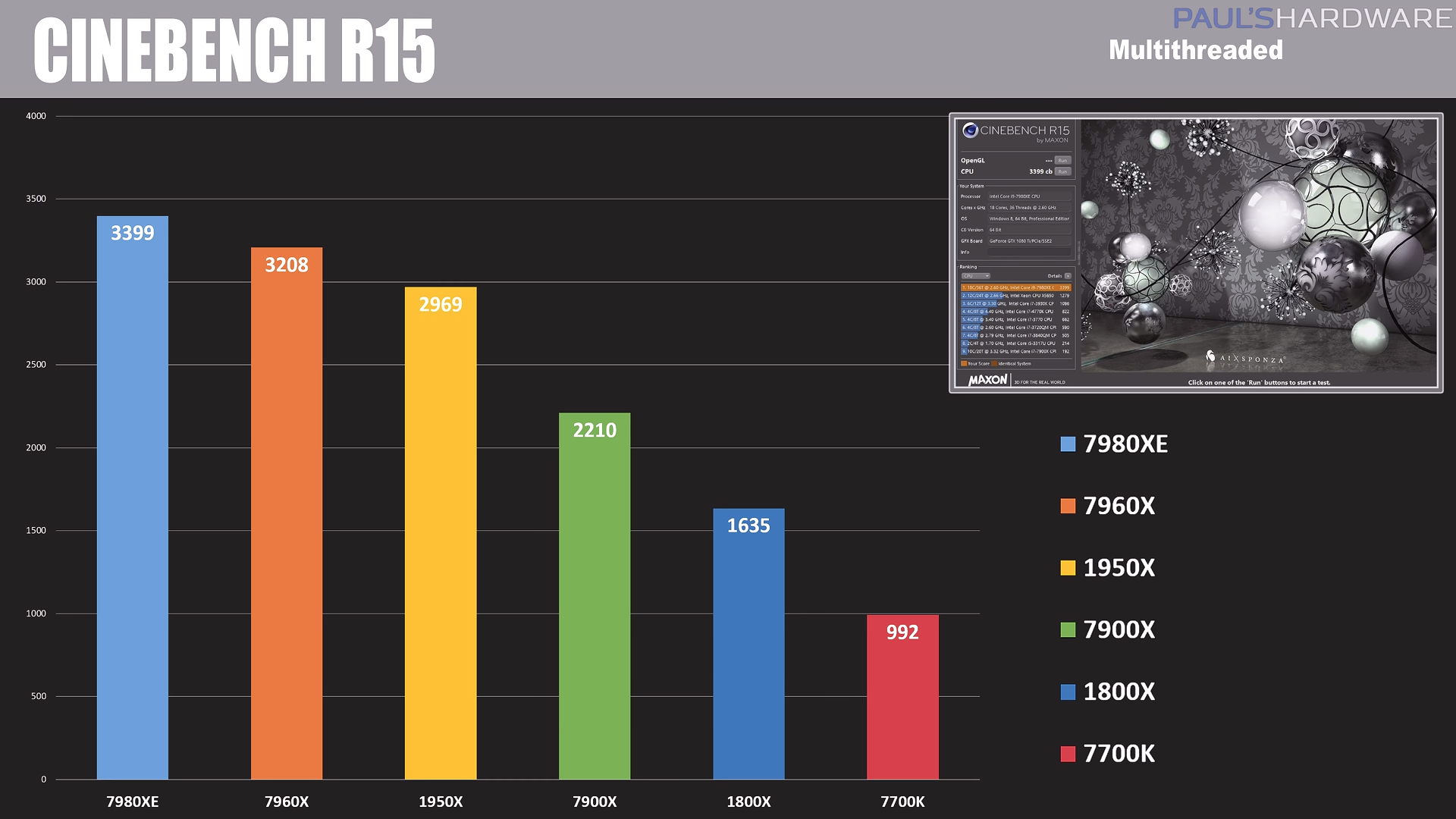
Intel released what could only be considered a response to Threadripper this September with their new i9 series of CPUs. These CPUs topped out at 18 cores, 2 higher than Threadripper, but at double the price. In testing, Intel's new i9 CPUs bested AMD's Threadripper, but at double the cost.

This video by Paul's Hardware demonstrates the pros and cons of both sides of the processors:
https://www.youtube.com/watch?v=RJziUkLpU74


The importance of this year for AMD does not shine through its product sales or performance statistics, but in the underlying future of the market for processors. AMD has not only clawed its way back into relevancy, but taken stabs at Intel that threaten its stability as king of processors. While it may be hopeful, only the future will tell.